
Thermal runaway
A failing cell can continue generating heat internally after visible flame has been controlled.
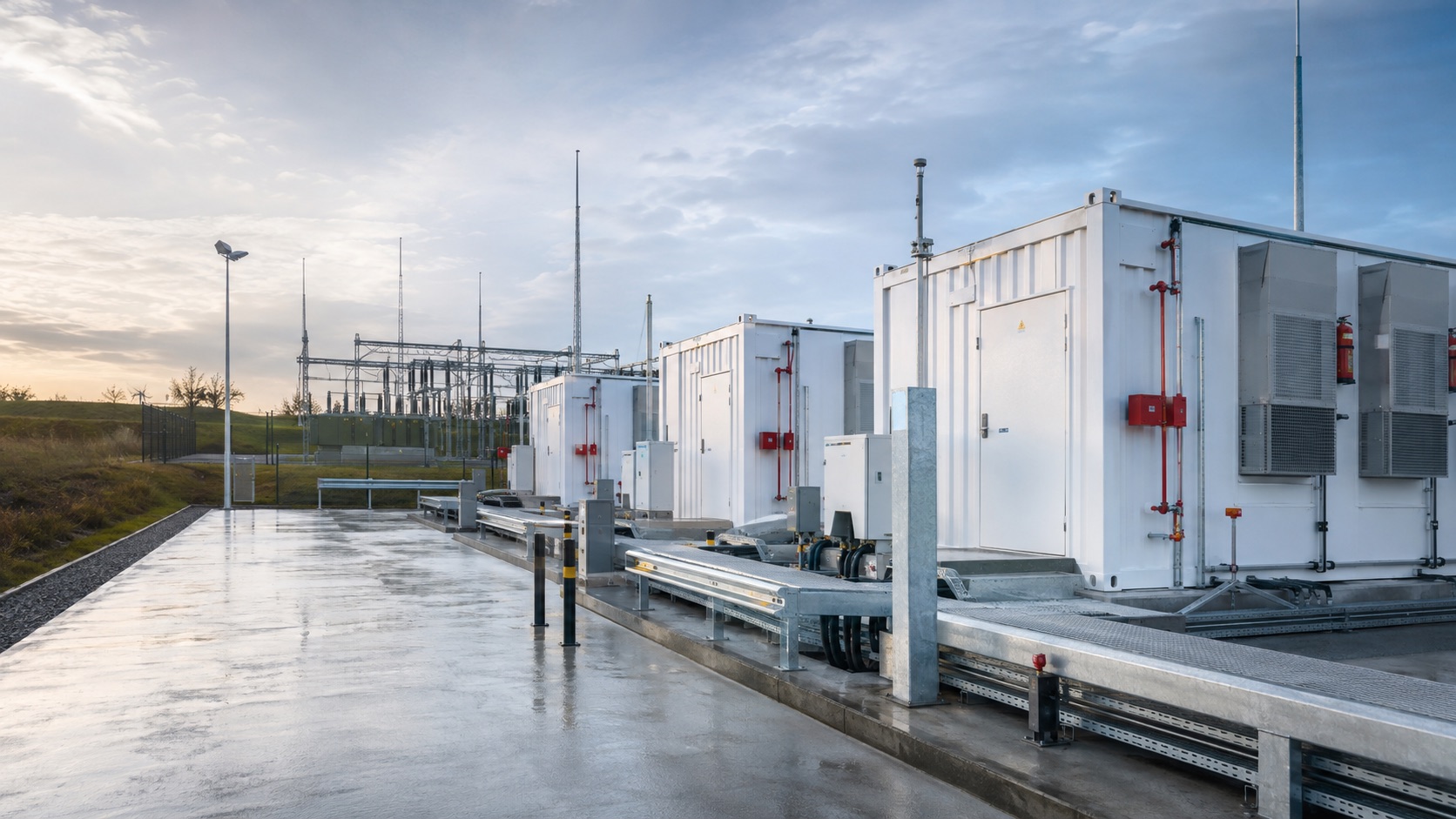
BESS fire protection · Europe
Pyralta develops the passive-fire workstream for battery energy storage projects—coordinating compartmentation, penetrations, protected interfaces and evidence with the complete safety case.
Contain escalationProtect boundaries and adjacent assets
Control interfacesClose gaps before they become variations
Defend the evidenceConnect tested scope to installed reality
The engineering reality
Lithium-ion thermal runaway can involve intense heat, flammable gases, propagation and re-ignition. Extinguishing visible flame does not automatically stabilise the battery.
Passive protection does not replace detection, ventilation, explosion control, suppression or emergency response. It makes those systems part of a coordinated, traceable strategy—and helps stop a local failure becoming a site-wide loss.
A failing cell can continue generating heat internally after visible flame has been controlled.
Heat can move from cell to module, enclosure and neighbouring assets unless the strategy limits escalation.
Vented gases can create toxic and ignitable atmospheres that must be coordinated with detection and ventilation.
Delayed ignition and prolonged cooling can affect access, emergency tactics and recovery planning.
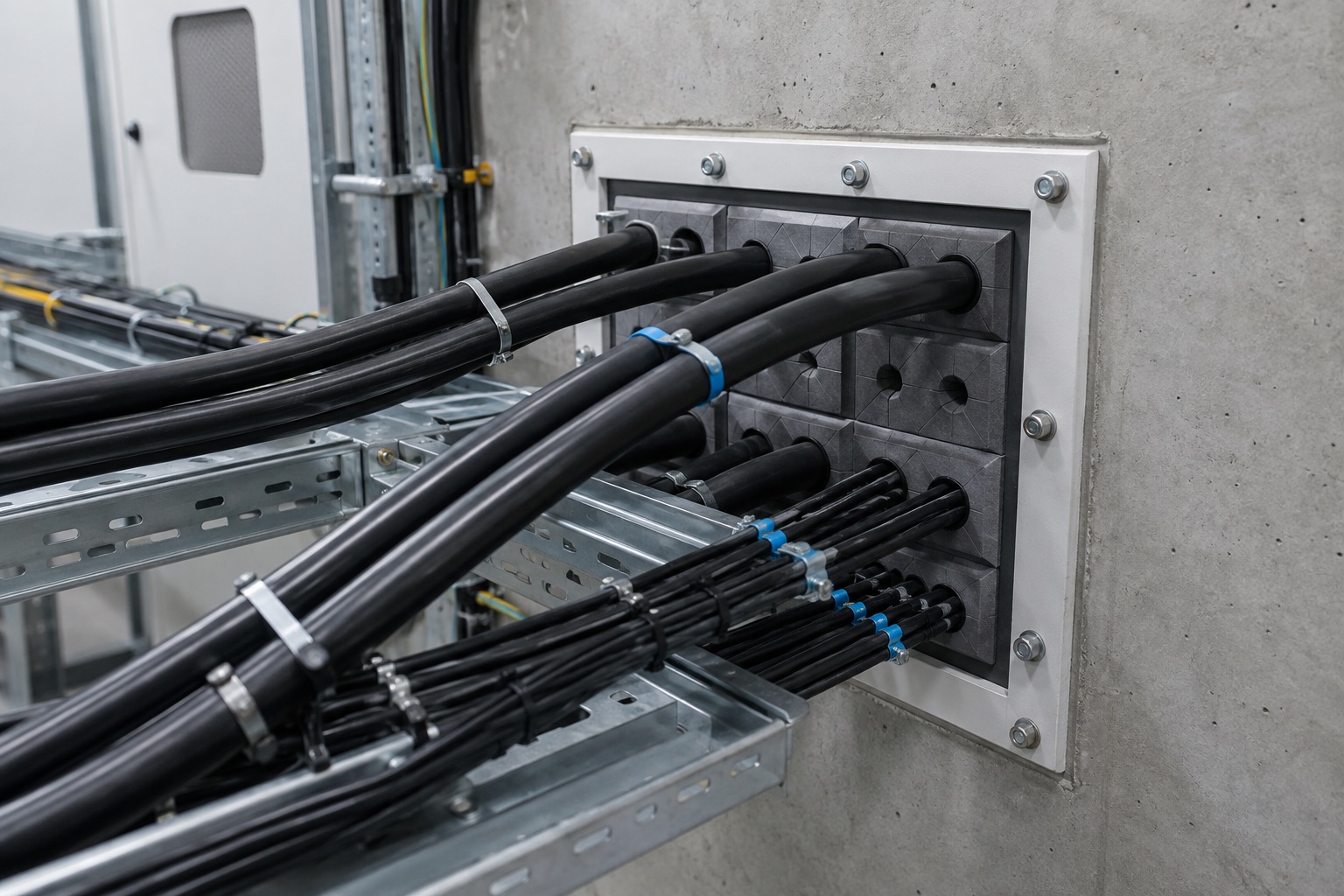 Typical interface · Cable and control-service penetration
Where projects become vulnerable
Every cable added, duct rerouted or opening enlarged can change the performance of a compartment. Generic notes such as “firestop by others” do not define a buildable detail—and they do not allocate risk.
The most expensive BESS fire-safety problem is often the interface nobody owned.
Pyralta’s passive-fire workstream
Support can begin at feasibility, close a defined design gap or verify a live installation. The result is a clearer scope for owners, consultants, EPCs and specialist contractors.
Define the passive-fire objectives, assumptions, design criteria and acceptance route before procurement.
Coordinate fire-resisting walls, floors, ceilings, doors and protected rooms with the wider safety case.
Resolve power, control, HVAC and drainage interfaces without weakening the required fire boundary.
Check classifications, test reports, field of application and declared performance against the actual detail.
Make design, supply, installation, inspection and handover ownership explicit across every interface.
Translate the strategy into clear specifications, schedules, quantities and contractor-ready requirements.
Review submittals, answer site queries and inspect critical details before they disappear behind finishes.
Build a traceable evidence pack and a route for future cable additions, maintenance and system modifications.
A disciplined route
Products are selected against the required performance, tested scope and installed conditions—not the other way around.
We establish the battery technology, configuration, project stage, stakeholders, available evidence and real decision.
We set the performance objectives, fire boundaries, interfaces, responsibilities and evidence route.
We develop coordinated details and a procurement-ready passive-fire package around the actual installation.
We support submittals, installation, handover evidence and controlled change through the project lifecycle.
European delivery
International contractors should not have to choose between English-language coordination and local project relevance. Pyralta connects both.
Project support in Dutch and English, with the passive-fire scope mapped to the site risk assessment, authority and insurer expectations. Where relevant, the design basis can account for PGS 37-1, NEN 4288 and product-specific fire-test evidence.
Clear English-language coordination for international EPCs, with local project requirements, fire-service input, regional permitting and European fire-resistance classifications translated into one buildable interface strategy.
Engineering from Barcelona for developers, industrial owners and contractors, coordinating the BESS safety case with the applicable RSCIEI, building conditions, fire-service access and project-specific approval route.
Standards and evidence
A test report only supports the detail that falls within its tested or assessed scope. Battery chemistry, state of charge, enclosure geometry, spacing, ventilation and installation conditions matter.
Depending on the project, the evidence register may need to consider European fire-resistance and penetration-test classifications, PGS 37-1, NEN 4288, the EU Batteries Regulation, IEC battery and energy-storage standards, insurer requirements, or system-specific UL 9540A data.
Pyralta does not present a component certificate as proof of a complete BESS installation. We identify what the evidence demonstrates, where it applies and which project decision it supports.
Why Pyralta
Pyralta works from Barcelona and Rotterdam with developers, consultants, EPCs, system integrators and specialist contractors. We are manufacturer-independent at the engineering stage and supply approved partner systems when they fit the agreed basis of design.
Project-specificBattery, enclosure, site and approval route first.
Contractor-readyClear English-language details, scope and evidence.
Lifecycle-awareHandover and future change are designed in.
 Site review · Passive-fire interfaces and evidence
Engineer’s download
Use Pyralta’s BESS Passive-Fire Interface Checklist at concept, tender or technical-submittal stage. It helps teams identify missing inputs before they become redesign, delay or unpriced scope.
Request the checklist ↗Battery and evidenceChemistry, energy, enclosure and applicable fire-test data.
Site and boundariesLayout, exposures, compartment lines and access strategy.
Services and changeCables, ducts, drainage, spare capacity and replacement route.
Safety interfacesDetection, ventilation, suppression, shutdown and emergency response.
Ownership and proofDesign responsibility, installation checks and handover evidence.
Frequently asked questions
BESS fire protection is the coordinated set of measures used to detect abnormal conditions, manage gases, limit fire and thermal propagation, protect people and exposures, support emergency response and preserve structural and compartment boundaries. The right strategy combines battery-system controls, active protection, passive protection and operational planning.
Lithium-ion cells can enter thermal runaway and continue producing heat and flammable or toxic gases through internal chemical reactions. Visible flame control does not automatically mean the event is stable, so the design must consider propagation, gas behaviour, cooling, re-ignition and safe access.
Passive systems maintain fire-resisting boundaries and protect critical interfaces without waiting for activation. Their role may include compartmentation, fire barriers, enclosure protection and tested sealing of cable, pipe, duct and mixed-service penetrations. The required outcome remains project-specific.
No single product is a complete BESS fire strategy. Battery chemistry, state of charge, enclosure geometry, separation, ventilation, water supply, drainage, test evidence, emergency response and local requirements all affect the design. Products should be selected only after the required performance and interfaces are defined.
UL 9540A is a fire and thermal-runaway propagation test method, not a universal European installation code. Its data can still be valuable to European designers, insurers and authorities when it is relevant to the proposed battery system. Pyralta maps any international evidence to the project-specific European approval and passive-fire scope.
PGS 37-1 provides a risk-based framework for safely applying lithium-containing energy carriers in energy storage systems. The exact legal status and required measures must be confirmed for the project. Pyralta uses the agreed design basis to coordinate fire boundaries, penetrations and evidence with the wider Dutch safety strategy.
The highest leverage is usually during concept or early detailed design, before the container layout, cable routes, ventilation, drainage and procurement packages are fixed. Pyralta can also review tenders, construction queries, existing installations and later modifications.
Yes. Pyralta supports international project teams in English from Barcelona and Rotterdam, while also working in Dutch and Spanish. The aim is to convert local requirements and test evidence into clear responsibilities, details and deliverables that every contractor can price and build.
Technical qualificationNo single passive-fire product constitutes a complete BESS fire strategy. Applicable authority, insurer, battery-system and emergency-response requirements remain project-specific and must be confirmed by the responsible project team.
Technical project review
Share the information you already have. Pyralta will identify the passive-fire questions, evidence gaps and interfaces that should be resolved before a system is selected.
Confidential files are not required for the initial qualification. Secure document exchange can be arranged afterwards.